Boutique management simplified
Style Savvy empowers multi-location boutique owners to manage orders, track drivers, and optimize inventory with ease.

Style Savvy empowers multi-location boutique owners to manage orders, track drivers, and optimize inventory with ease.
At Style Savvy, we recognize that clothing is a necessity for everyone. However, not everyone can afford high-quality clothes at an affordable price, regardless of their economic background. That's why Style Savvy aims to address this challenge by making stylish and affordable clothing accessible to all.
My main responsibility for this project was to design an admin dashboard for Jason, the CEO of Style Savvy. The dashboard needed to be user-friendly and provide him with important information about the agency's performance across all locations in New York. Jason required quick access to statistics such as the number of orders placed and the performance of the agency's various branches. However, there was initially a lack of clarity regarding the brand's visual identity, which added an extra challenge to the design process.

I had a conversation with Jason, which revealed that he had little to no knowledge of how he wanted his company to be represented. This drove me to start creating a unique brand identity for Jason.
In our conversation, he said some things that struck me which was:
The second statement stood out because it contradicted my initial thought because, like I said, “Who doesn’t like charts and graphs for huge data?”. This was interesting for me to work on because I had to think of how I could critically fish out ideas to stand out and also be easy to use.
After the interview, I played around with some low-fidelity wire-frames of how the final design would look, bearing in mind that the design would not include charts or graphs of any sort, that would be complicated of any kind. Here are some I restructured around with:



I had a conversation with Jason, which revealed that he needed to gain more knowledge of how he wanted his company to be represented. This drove me to start creating a unique brand identity for Jason.

Font Used: Lato
Couple of Design Screens more👇🏽
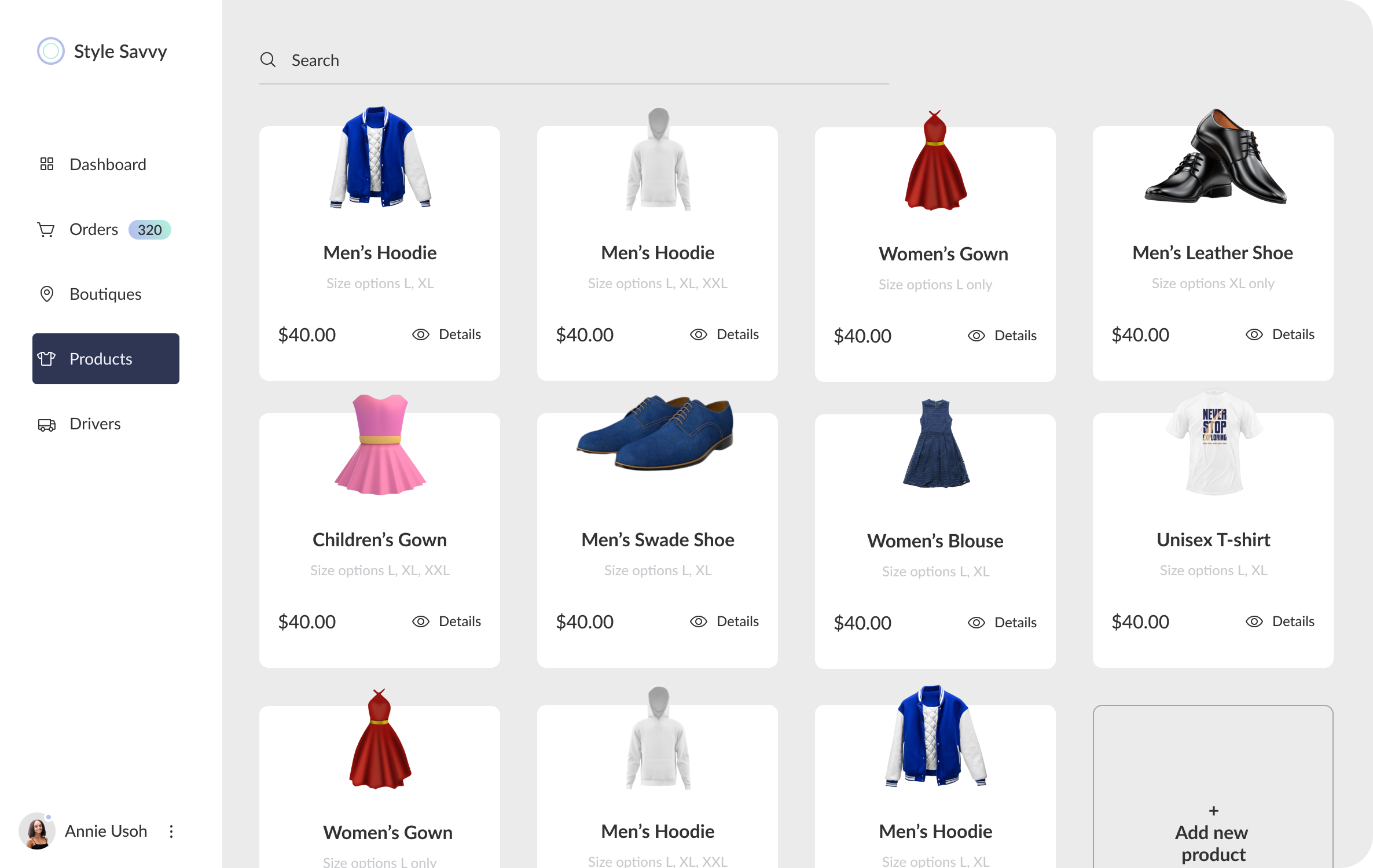
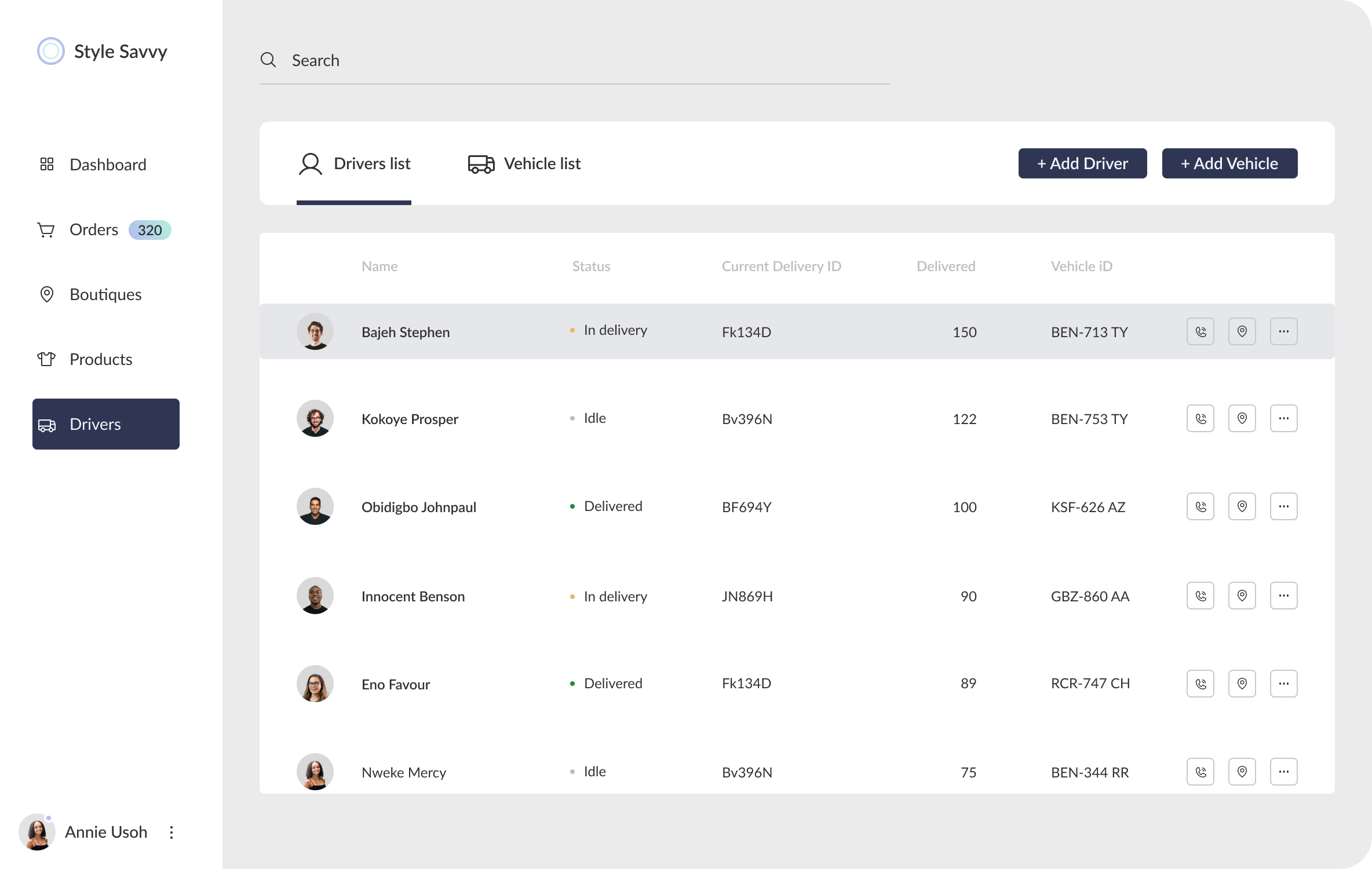


Our design was successful because it addressed the main problem of Style Savvy, which was "ease of management from the fingertips." This breakthrough not only resulted in a 12% increase in conversion rate but also enhanced the user experience.
All businesses needing a designer face a common problem that can hinder their company from reaching its full potential. This problem is unique to each company, and it was one of the mistakes I made as a designer. I mistakenly believed that I could apply a one-size-fits-all solution, which is detrimental to both the users and the company as a whole.
Working on this design reminded me of the number one rule in designing: always prioritize a user-centered approach when solving the company's problem statement.
